
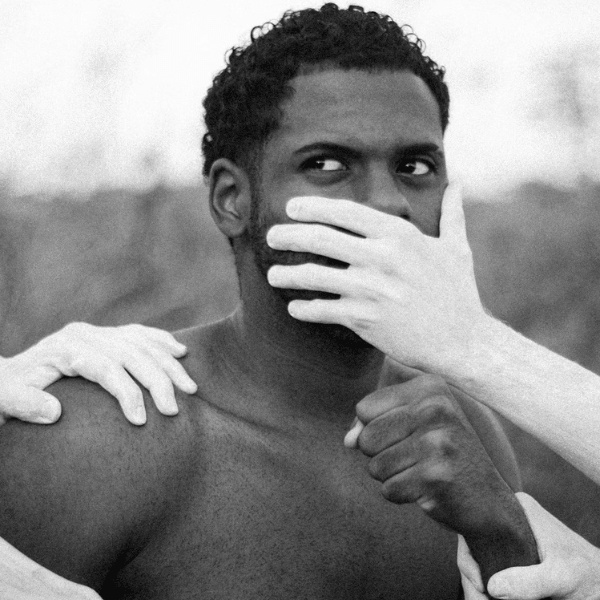
By Beautiful Machine Magazine
I am a 31 year old African American CPA. I grew up in what most people would call a good life. Middle class family. Nice suburban neighborhood. Private schools. Two parents who taught me discipline, education, manners, and accountability. I was raised around mostly white people and honestly growing up I did not experience the kind of racism I saw in movies or history books. There were moments of course. Small comments. Weird assumptions. Being the only Black girl in certain spaces. But nothing that made me think racism was still deeply alive in America.
Then I got older.
College changed everything.
That was when I started realizing how many people quietly assumed I did not belong. Suddenly people who never knew my story had opinions about how I got there. Some assumed affirmative action was the reason I was accepted into school. Nobody saw the years of private education, long nights studying, sacrifices my parents made, or the pressure Black kids often carry to be twice as good just to receive half the respect.
I earned my place.
But that assumption stayed with me. And as I got older I started noticing something else that confused me even more. Why are so many white people so fascinated with Black people while simultaneously disliking us?
It is one of the strangest contradictions in American culture.
They criticize Black culture while tanning their skin darker. They mock Black features while paying surgeons to get fuller lips, curvier bodies, and bigger hips. They criticize our neighborhoods but imitate our slang, our music, our dances, our fashion, and even our entire aesthetic. Black culture drives entertainment across the globe. From sports to music to style the influence is undeniable.
Sometimes it feels like white America loves everything about Black people except actual Black people.
And honestly in the last ten years things feel worse.
I remember sitting in a hair salon listening to older women talk when one woman said something that stuck with me forever. She said, “If there was a 100 mile beach and Black people only used one mile while white people had the other 99 they would still come bother us on our one mile. They would complain we were laughing too loud or say the smell of our barbecue was bothering them. They would find a reason to be in Black folks’ faces.”
At first I laughed. Then I realized how accurate it felt.
There is this constant feeling that Black people are not allowed to simply exist peacefully without scrutiny, policing, criticism, or suspicion. Whether it is how we wear our hair, how we speak, how we gather, or how we protest somebody always seems uncomfortable with our existence.
And what makes it even more frustrating is how policies continue to reflect that discomfort.
Politicians continue trying to redraw voting districts in ways many people believe disenfranchise Black voters. The Voting Rights Act was created because racism existed so openly and aggressively that federal protections became necessary in the first place. The fact that parts of those protections continue getting challenged says a lot about where this country still stands.
If racism was truly over there never would have been a need for the Voting Rights Act to begin with.
Then there is the attack on diversity, equity, and inclusion programs. DEI has somehow been turned into a dirty word even though most Black professionals know the exact opposite of what critics claim is true. Most Black people are not underqualified. If anything many are overqualified because they have spent their entire lives understanding they must work harder, be smarter, speak better, and outperform others just to receive equal opportunities.
Yet the public narrative is often shaped as if Black people only received positions because of their race.
That could not be further from reality.
I have seen Black attorneys, Black doctors, Black executives, and Black academics who had credentials far beyond many of their peers while still being questioned about whether they truly earned their place. Meanwhile mediocrity is often excused or overlooked in others.
When companies practice diversity and inclusion now they are often criticized or even penalized politically as though creating opportunity for qualified Black professionals somehow threatens society.
It does not.
What threatens society is pretending inequality no longer exists while actively dismantling the systems meant to address it.
I thought things were improving. I really did.
But after Barack Obama became president something shifted. It was like his success awakened a level of anger and fear that had been hiding beneath the surface. The country became more divided, more hostile, more obsessed with race than I remembered growing up.
And when I look at many of the actions from the current administration it is difficult not to notice patterns that feel anti Black. Qualified generals and respected high ranking military officials are pushed out only to be replaced by people many critics believe are far less qualified. Efforts designed to increase representation and fairness are attacked. Conversations about racism are dismissed as political propaganda instead of reality.
At the same time I want to make something very clear.
Not all white people hate Black people. Not all white people are racist.
There are white people who have stood beside Black Americans throughout history and continue to do so today. There are white people who genuinely believe in equality, fairness, and justice.
But silence has become part of the problem.
When people stay quiet while harmful policies are enacted against Black communities that silence begins to feel like support. When people watch voter suppression efforts, attacks on diversity programs, discrimination, and unequal treatment happen without speaking up it sends a message whether intentional or not.
And that message is heard loudly in the Black community.
We do not need performative gestures. We need honesty. We need courage. We need allies willing to challenge racism even when it is uncomfortable. Especially when it is uncomfortable.
Because this is not just a Black problem. This is an American problem.
Sometimes I wonder if some white Americans fear revenge. Maybe they think Black people secretly want to do to them what was historically done to us. Maybe that fear explains why there is such resistance whenever Black people rise economically, politically, or culturally.
But the truth is much simpler than that.
Most Black people do not want revenge.
We want fairness.
We want opportunity.
We want to compete on an even playing field without having to constantly prove our humanity.
What confuses me most is how irrational hate can be. I recently saw a white supremacist rock group online making songs about hating Black people while literally using rap music to express it. Think about that. Even their hatred was delivered through a Black art form.
How do you hate people while consuming, borrowing, copying, and profiting from their culture every single day?
I still do not fully understand it.
Maybe I never will.
But I do know this. Black people have contributed enormously to this country and to the world despite every obstacle placed in front of us. And even through pain, discrimination, and misunderstanding we continue to create beauty, innovation, culture, resilience, and excellence.
Maybe the real question is not why some people hate Black people.
Maybe the real question is why after everything Black people still continue finding ways to love, build, create, and rise anyway.
And maybe the answer moving forward is not more silence.
Maybe the answer is finally having enough people brave enough to help fix it.

