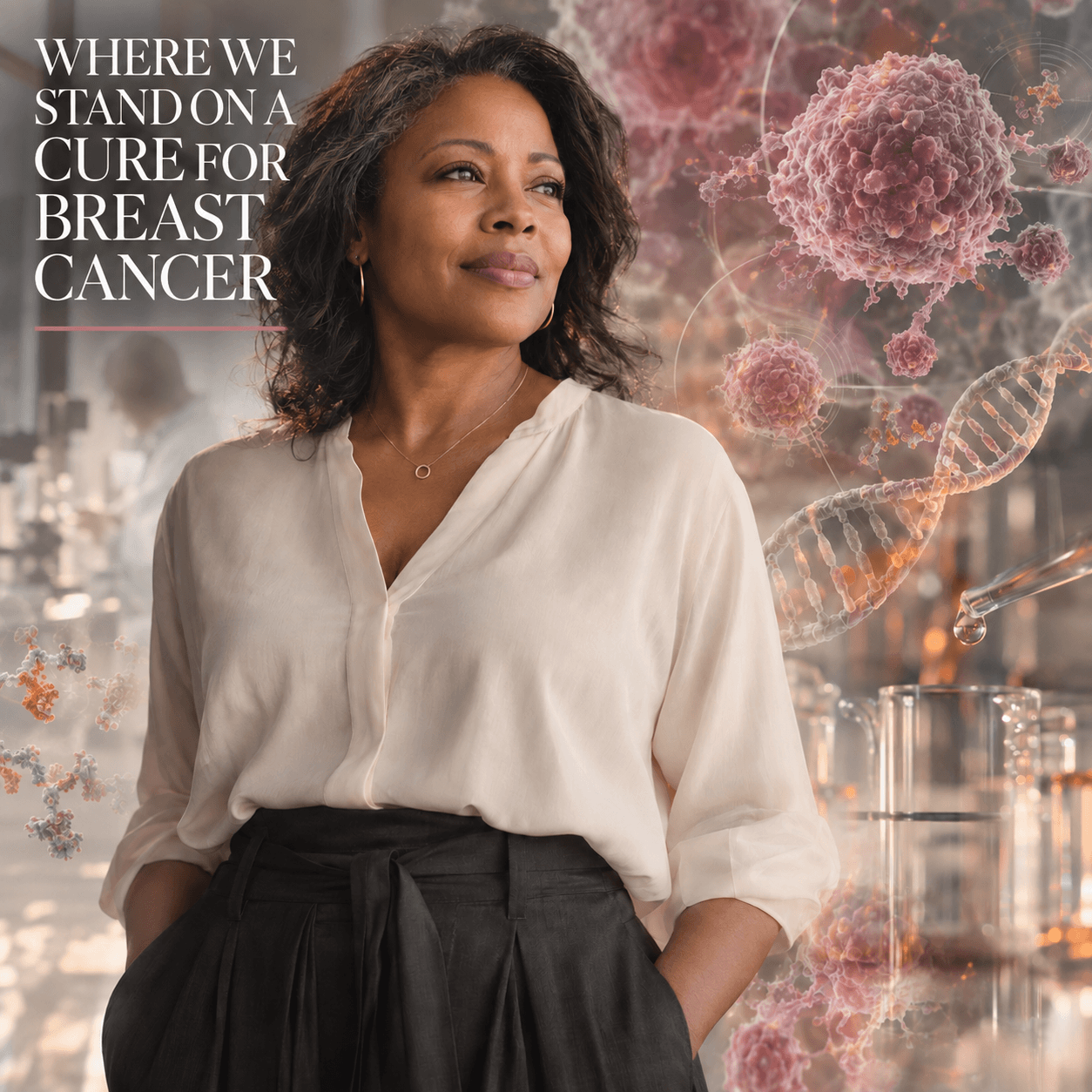
Every October, pink ribbons return and so does the question millions of families want answered. How close are we to curing breast cancer?
The honest answer is complicated. There is no single cure because breast cancer is not one disease. It is a group of cancers driven by different hormones, proteins and genetic mutations. A therapy that works remarkably well for one patient may do little for another.
What is undeniable is how far medicine has come. According to the American Cancer Society, the breast cancer death rate in the United States fell 44 percent between 1989 and 2023. Earlier detection and improved care have saved hundreds of thousands of lives. When the disease is discovered before it spreads beyond the breast, the five year relative survival rate is greater than 99 percent.
Many patients with early stage breast cancer are successfully treated with surgery, radiation, chemotherapy, hormone therapy or a combination of these methods. Doctors remain careful with the word cure because a small number of cancer cells can sometimes hide in the body for years. The longer a patient remains free of cancer, the more confident doctors become that the disease has been eliminated.
One of the most important changes has been the rise of precision medicine. Doctors can examine a tumor for estrogen receptors, progesterone receptors, the HER2 protein and specific genetic changes. This information allows them to choose therapy based on the biology of that particular cancer instead of treating every case the same way.
HER2 positive breast cancer was once considered especially aggressive. Trastuzumab changed the outlook by attacking the HER2 protein found on cancer cells. Newer medicines known as antibody drug conjugates can locate cancer cells and deliver powerful medication directly to them. Trastuzumab deruxtecan has shown strong results in several forms of advanced disease, including cancers with low levels of HER2.
There have also been important gains for patients with hormone sensitive tumors. Medicines called CDK4 and CDK6 inhibitors can slow cancer growth and reduce the chance of recurrence in certain patients. New hormone therapies may work even after a tumor stops responding to older medications.
Triple negative breast cancer remains harder to treat because it lacks the three common targets used by many therapies. Even so, new options are changing the outlook. Immunotherapy can help the immune system recognize and attack certain tumors. Sacituzumab govitecan has extended survival for some patients with advanced triple negative disease. People with inherited BRCA mutations may benefit from PARP inhibitors, which keep cancer cells from repairing damaged DNA.
The greatest challenge is metastatic breast cancer, which has spread to distant organs. It is usually considered treatable but not curable. The five year survival rate is now around one third, although an average cannot predict what will happen to any individual patient. Some people live for many years as different medicines control the disease.
Scientists are studying blood tests that detect tiny pieces of tumor DNA. These liquid biopsies may eventually reveal signs of returning cancer months before it appears on a scan. Researchers are also testing vaccines designed to train the immune system to prevent recurrence. These vaccines are still experimental and should not be mistaken for an available cure.
Medical discoveries have not benefited every community equally. Black women are about 40 percent more likely to die from breast cancer than White women, despite similar diagnosis rates. Later detection, unequal access to specialists, differences in care and higher rates of aggressive triple negative disease all contribute to this disparity. A breakthrough means little to a patient who cannot receive it.
We are not at the finish line, but breast cancer is far more treatable than it was a generation ago. The future will probably not arrive through one miraculous announcement. It will come through earlier detection, treatments designed for each tumor and better ways to prevent the disease from returning.
A cure may ultimately arrive one discovery, one type of breast cancer and one survivor at a time.

