
By Demetrius Carrington
I was only on Martha’s Vineyard for four days, but four days should not be enough time for a place to change you. It should not be enough time to make you question how you have been living, what you have become accustomed to, or how much tension you may carry without even realizing it.
Somehow, four days on Martha’s Vineyard did exactly that for me. I went there expecting a vacation, but I came home understanding something about myself that I had never been able to put into words. For four days, I felt free. Not successful, important, connected, or accomplished. I simply felt free, and as a Black man in America, there was something incredibly powerful about that feeling.
I Didn’t Realize I Had My Guard Up Until I Put It Down
There are things you learn to do without knowing you learned them. You become aware of your surroundings. You read rooms and notice who is looking at you. You consider how you are dressed, how loudly you are speaking, where you are standing, and whether you are truly welcome.
You learn when to engage and when not to engage. After enough years, you don’t necessarily call it being guarded. You simply call it living, because it becomes so normal that you stop recognizing the weight of it.
Then I got to Martha’s Vineyard, and something happened there that I wasn’t expecting. My guard came down. I wasn’t thinking about race every moment or wondering whether someone was uncomfortable with me. I wasn’t trying to determine whether I belonged somewhere because I simply felt like I belonged.
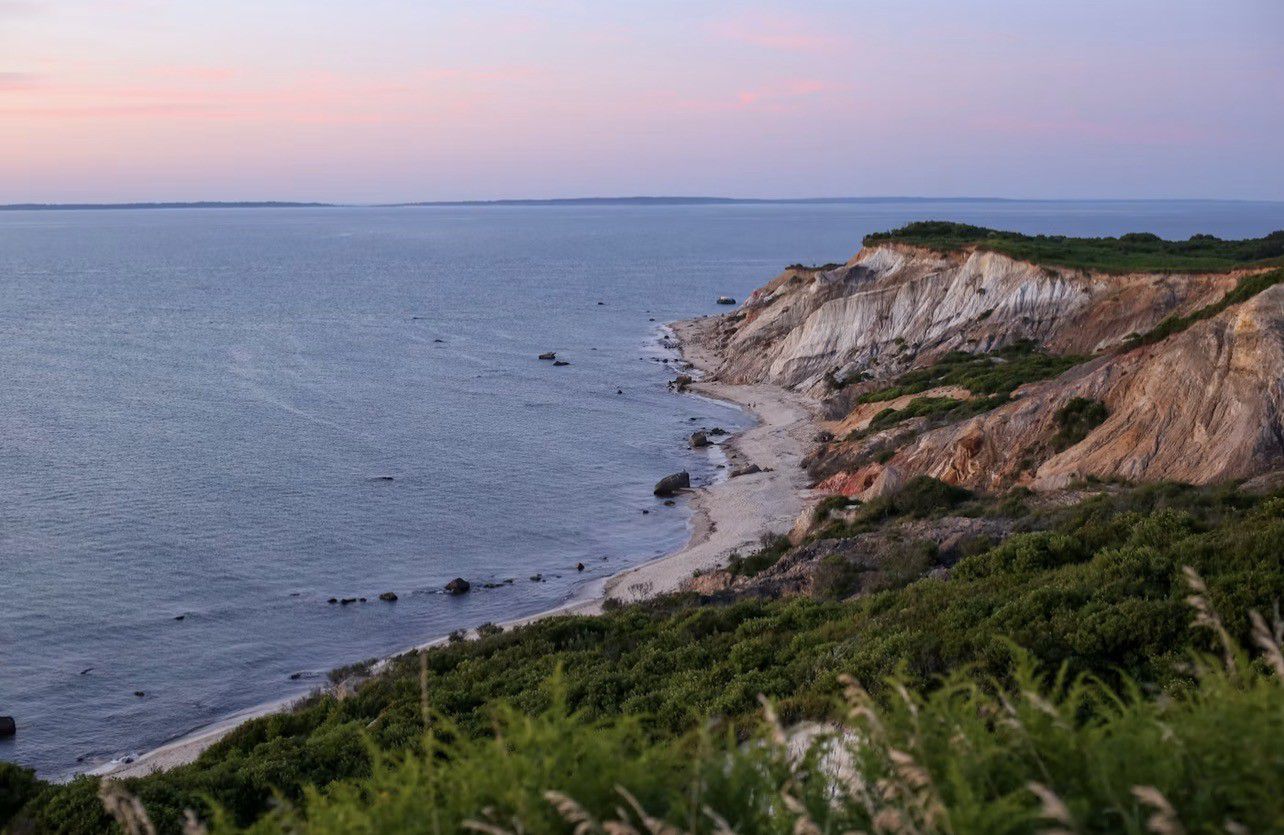
What made it even more beautiful was that I wasn’t surrounded exclusively by people who looked like me. I saw Black people, white people, and people from different backgrounds interacting with one another in a way that seemed remarkably ordinary. Maybe that was the extraordinary part because nobody seemed to be trying so hard. People were simply living.
I remember watching families flying kites, and there was something incredibly beautiful about how simple it was. Children were running while parents laughed and the wind came off the water. People seemed to have nowhere they urgently needed to be.
I watched teenagers hanging around and enjoying themselves with the kind of carelessness young people are supposed to have. They weren’t performing adulthood or trying to look tough. They were simply young people enjoying summer.
I saw families walking together, people talking, and people sitting around doing absolutely nothing. Everywhere I looked, I saw something that I realized I don’t see enough in my everyday life. I saw peace, not excitement disguised as happiness, money disguised as happiness, or status disguised as happiness. I wasn’t watching people take pictures just to prove to the world they were having a good time. I saw people who actually looked happy.
Eventually, I started asking myself why this place felt so different.
Then I Learned the History
The more I learned about Martha’s Vineyard, particularly Oak Bluffs, the more I understood that what I was feeling wasn’t entirely accidental. Black people have a deep and meaningful history on this island.
African Americans were part of Martha’s Vineyard long before the island became synonymous with celebrity summer vacations. Historical accounts document Black people working in maritime trades, households, farms, and other occupations on the island going back centuries. Oak Bluffs eventually became particularly important to Black families as a place to live, gather, vacation, and create community.
That history becomes especially meaningful when you understand what vacationing once meant for Black Americans. Today, we can casually say that we’re going on vacation, but there was a time when a Black family with enough money to travel still had to worry about whether a hotel would accept them.
Money couldn’t purchase dignity everywhere, and education couldn’t guarantee acceptance. Professional success couldn’t protect you from humiliation. You could be a doctor, attorney, professor, entertainer, or business owner and still arrive somewhere only to discover that your skin color mattered more than everything you had accomplished.
That is part of what makes the story of Shearer Cottage so important. Charles and Henrietta Shearer established the 12 room Shearer Cottage as an inn in Oak Bluffs in 1912. It catered to African American travelers during a time when Black guests were not welcomed at many other lodging establishments on the island. The cottage later appeared in the Negro Motorist Green Book, the famous guide that helped Black travelers identify places where they could safely eat, sleep, and receive services during segregation.

More than a century before I arrived and experienced this unexpected feeling of freedom, Black people were coming to this same island searching for some version of the same thing. They wanted a place to exhale, swim, laugh, fall in love, raise children, and sit on a porch without having to prove anything to anybody.
Shearer Cottage became a gathering place for generations of Black visitors. Its guests included extraordinary figures such as Paul Robeson, Ethel Waters, Madame C.J. Walker, Lillian Evanti, and members of the Adam Clayton Powell family.
But perhaps the most important people weren’t famous at all. They were the families whose names history didn’t record. They were fathers who worked all year and finally got a week near the water, mothers who could watch their children play, young couples building their lives, and children who grew up associating summer with Martha’s Vineyard and eventually brought their own children back.
Generation after generation came to Martha’s Vineyard, and together they created something that would become much larger than a vacation destination.
The Inkwell
Then there is the Inkwell, the famous stretch of beach in Oak Bluffs that has long been associated with Martha’s Vineyard’s Black community. It traditionally served as a gathering place for African American residents, families, and visitors.
Even the name carries a complicated history. The African American Heritage Trail of Martha’s Vineyard notes the name’s connection to the segregation era and the history surrounding Black beachgoers in Oak Bluffs. Over time, the Black community embraced the place and transformed it into something very different.
There is something profoundly Black American about taking something that was intended to diminish you and making it yours. There is something powerful about taking exclusion and creating community, then taking a place where society once attempted to tell you where you could stand and turning it into a place where generations would proudly choose to stand.
That beach became more than sand and water because it became memory, tradition, community, and belonging. That word, belonging, kept coming back to me as I thought about my own experience.
Maybe That Was What I Was Feeling
I didn’t know all of this history when I first experienced those emotions. I didn’t walk around thinking about historical markers every minute, and I certainly wasn’t analyzing sociology while watching people fly kites. I was simply experiencing the island.
Perhaps history has a way of leaving fingerprints on a place. Maybe generations of Black people choosing Martha’s Vineyard as somewhere they could rest helped create the culture I encountered.
Oak Bluffs developed a reputation over generations as a summer destination for Black professionals and families from cities including Boston, New York, Washington, and Philadelphia. The community became associated with Black writers, intellectuals, artists, political leaders, professionals, and families who returned summer after summer.
Harlem Renaissance writer Dorothy West became one of the Vineyard’s most important literary figures. She eventually lived on the island throughout the year, and her connection to Oak Bluffs became part of its cultural history.
The African American Heritage Trail of Martha’s Vineyard now preserves numerous sites connected to this history. They include Shearer Cottage, the Dorothy West home, historic residences, churches, cemeteries, and places associated with civil rights leaders and ordinary Black islanders.
Maybe what I felt during those four days wasn’t something Martha’s Vineyard had suddenly invented for me. Maybe I had stepped into something generations before me had already discovered.
The Luxury of Being Ordinary
When people talk about Black progress, we often talk about extraordinary people. We celebrate the first person to accomplish something, the richest, the most powerful, and the person who broke the barrier. Those stories matter, but Martha’s Vineyard reminded me that there is another kind of freedom that receives far less attention.
It is the freedom to be ordinary. It is the freedom to walk down the street and not represent your entire race, sit on a beach, laugh too loudly, wear whatever you want, watch your children play, and have absolutely nothing important to do that afternoon.
It is the freedom to be Black without having to think about being Black every second. There is tremendous privilege in simply being allowed to exist, and that may sound strange to someone who has never had to think about it.
I understood it on Martha’s Vineyard because for those four days, I wasn’t trying to make an impression or accomplish anything. I wasn’t the publisher, businessman, or somebody who needed to know the right people or say the right thing. I was simply Demetrius, and being Demetrius was enough.
Four Days That Stayed With Me
I wish I had stayed longer, but perhaps four days was enough. It was long enough to watch those kites dancing in the sky and notice those teenagers enjoying the kind of carefree summer afternoon every teenager deserves.
It was long enough to see Black families who looked completely at home and people of different races sharing the same spaces without the atmosphere feeling forced or manufactured. It was long enough to understand why generations of African Americans kept coming back.
Most importantly, it was long enough to realize how beautiful people look when they feel safe enough to relax. It was also long enough for me to ask myself a much harder question about why I don’t feel like this more often.
I don’t completely know the answer, and maybe that’s the part of Martha’s Vineyard I brought home with me. The island didn’t just give me four peaceful days. It gave me a standard against which to measure peace.
I now know what it feels like when my shoulders drop and I stop scanning the room. I know what it feels like when being a Black man doesn’t disappear from my identity, but also doesn’t feel like something I constantly have to manage.
Martha’s Vineyard didn’t make me forget that I was Black. It did something much more meaningful because it allowed me to enjoy being Black without feeling burdened by it.
Perhaps that is why this little island has meant so much to so many Black Americans for so many generations. They weren’t running away from who they were. They had found somewhere they could completely be who they were.
I understand that now because I went to Martha’s Vineyard for only four days, but part of me has never left.

