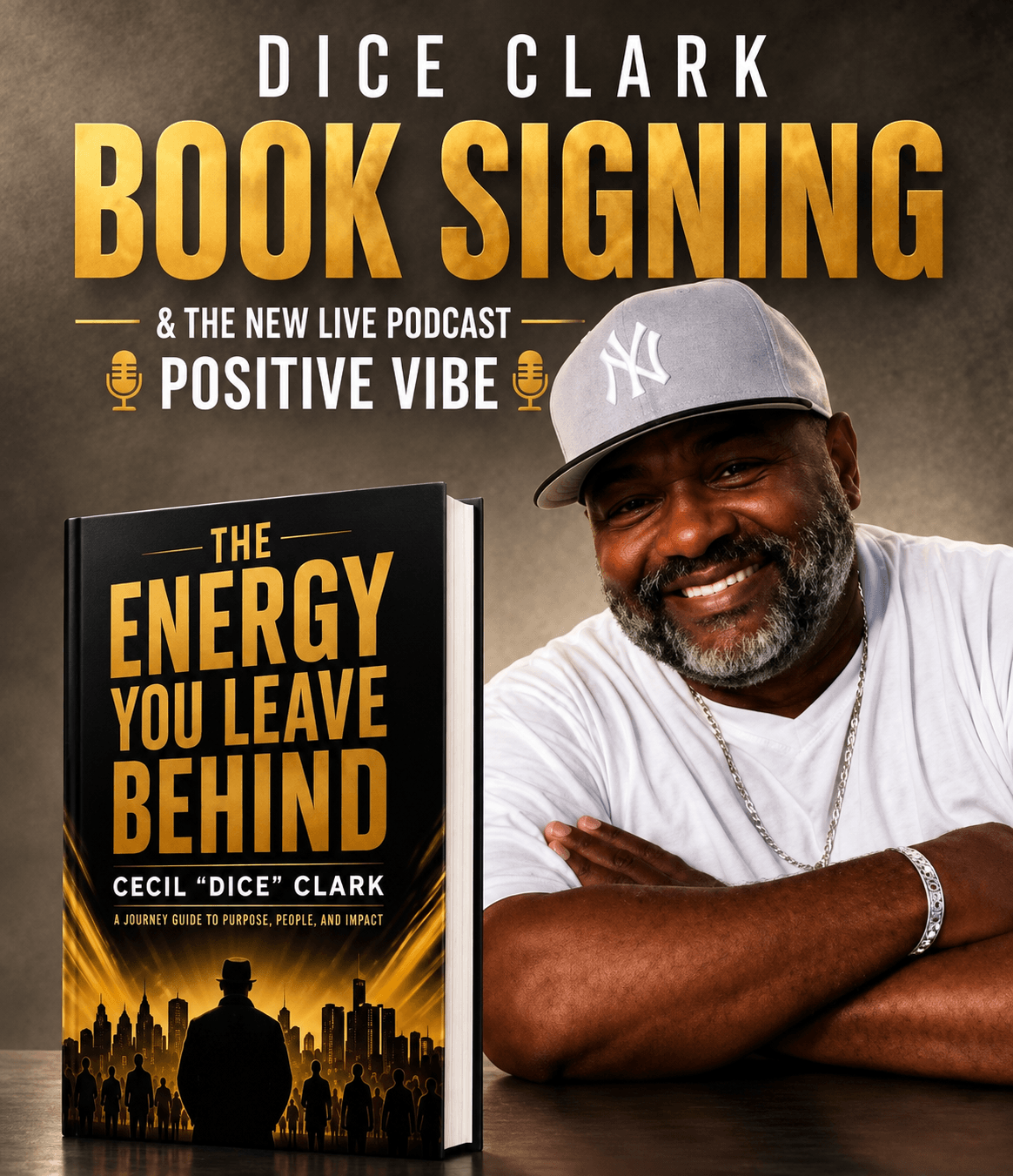
There is a simple truth about life that we sometimes fail to consider. Long after a conversation ends, a meeting is over, or we leave a room, something of us remains. People may forget exactly what we said. They may forget where we were or what we were doing. But they often remember how we made them feel. They remember the encouragement, the kindness, and who showed up when they needed help. They also remember the moments when someone could have made a difference and chose not to.
That is the life lesson at the heart of Cecil “Dice” Clark’s new book, The Energy You Leave Behind. For Clark, the idea is bigger than simply having a positive attitude. It is about recognizing that every person leaves something behind through the way they live, the way they treat others, and the way they respond to the needs around them.
It is a message Clark understands because community has never been an abstract idea to him. Community is the people who need encouragement, the young people who need a safe place to gather, the families who need support, and the neighbors who deserve to know that someone sees them and cares.
The Energy You Leave Behind asks readers to consider a question that stays with them long after the final page: What do people feel, learn, or carry with them after spending time with us? The answer is different for everyone, but Clark believes we all have the ability to influence the people around us. Sometimes that influence comes through a major act of generosity. More often, it happens through smaller moments that may seem insignificant at the time.
A word of encouragement can change someone’s day. A moment of patience can prevent a situation from becoming something worse. Taking the time to listen can remind someone that their voice matters. Helping a person when there is nothing to gain in return can restore their belief in people. We do not always get to see what happens next, but the person we encourage today may encourage someone else tomorrow. A young person who receives guidance may eventually become a mentor. A family that receives help during a difficult moment may one day find itself in a position to help another family. That is how energy travels.
That idea is reflected in the work Clark has built throughout Detroit. He founded Love Our Kids, Families, and Community, an effort focused on uplifting families and underserved communities. His community initiatives have included school and holiday giveaways, support for seniors and people experiencing homelessness, youth mentoring, mental health awareness, and autism advocacy.
He also created Takers Game Vault, a supervised space where young people can connect through gaming and community. While the programs may serve different needs, the purpose behind them remains consistent. Clark wants to create spaces where people feel supported, included, and valued.
His work also recognizes something important about community service. Helping people is not always about solving every problem. Sometimes it begins with simply being present. Showing up, listening, creating a safe environment, offering an opportunity, or letting someone know that another person genuinely cares can make a difference.
Clark has also used media as another way to bring people together and create conversations. He co owns the podcast What Up Doe and co hosts Spectrum Talk, which spotlights autism, community needs, and cultural resilience. His new book becomes another extension of that work. Instead of limiting the conversation to a community event, a podcast, or a single interaction, The Energy You Leave Behind allows the message to travel into homes and into the lives of people Clark may never personally meet.
In a recent FOX 2 Detroit interview, Clark discussed The Energy You Leave Behind along with his new Positive Vibes podcast. The conversation explored the effects of negative energy, the importance of positive stories, and the decision each person can make to become more intentional about what they bring into the lives of others. Faith and community are also part of the personal journey behind his message.
The book also challenges the idea that legacy belongs only to famous people, wealthy people, entertainers, athletes, elected officials, or people whose names appear on buildings. Much of what a person leaves behind is built quietly through everyday relationships and choices. It can be found in lessons passed from parents to children, teachers who refuse to give up on students, mentors who provide direction, friendships that endure difficult moments, and neighbors willing to care about what happens beyond their own front door.
Clark’s work reflects that principle. Detroit has long been shaped by families, neighborhoods, churches, businesses, schools, organizations, and individuals willing to invest in one another. Making that investment does not always require money. It can mean giving time, sharing knowledge, creating access, offering encouragement, opening a door, or simply showing a young person that someone believes in them.
The Energy You Leave Behind asks readers to think about that influence in their own lives. What happens when you enter a room, and what remains after you leave it? Did you encourage someone? Did you offer something that could help another person move forward? Did you make someone feel seen? The answers may never bring applause or recognition, but their impact can still be lasting.
As Clark continues his community service and public conversations, the book gives a larger voice to an idea that has guided much of his work for years. We cannot control everything that happens around us or solve every problem facing our communities, but we can be intentional about what we contribute to the people we encounter.
When the conversation is over, the event has ended, and we have walked out of the room, the most important question may be a very simple one, What energy did we leave behind?

