
The University of Michigan likes to call itself “the leaders and best.” Over the last few years, though, its athletic department has looked less like a model of stability and more like a case study in how quickly a blue-blood program can lose the plot.
The latest proof dropped like a bomb this week.
On Wednesday, Michigan abruptly fired head football coach Sherrone Moore “for cause,” saying a university investigation found credible evidence that he engaged in an inappropriate relationship with a staff member in violation of school policy. Athletic director Warde Manuel emphasized a “zero-tolerance” stance in a written statement.
Hours later, Moore was detained and jailed in Washtenaw County as a suspect in an alleged assault reported in nearby Pittsfield Township. As of Thursday afternoon, he was still in custody awaiting arraignment and possible charges, with police releasing only minimal details.
This isn’t happening at some middling program. Moore took over in 2024 after Jim Harbaugh’s national title run, posted a winning record (18–8 overall), and had Michigan sitting 9–3 and bowl-bound this season. But his tenure was already dented by the NCAA’s sign-stealing scandal, which led to suspensions and a blistering infractions report accusing the program of an organized in-person scouting scheme and failure to monitor.
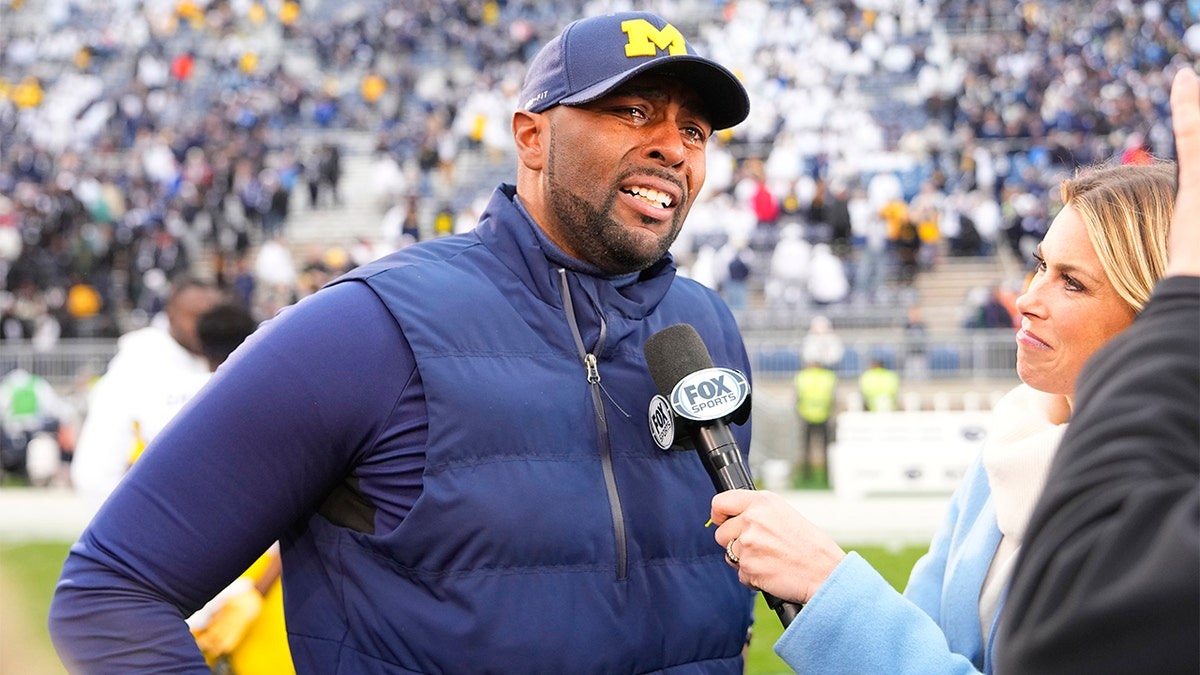
Now, with Moore gone on the eve of the Citrus Bowl and associate head coach Biff Poggi serving as interim, Michigan isn’t just replacing another coach. It’s fighting a perception problem: that chaos, not championship culture, is what really lives behind the block M.
Moore’s exit feels shocking, but it’s landing on top of a pile of unresolved mess.
Former co-offensive coordinator Matt Weiss was charged federally in a high-profile hacking case involving alleged unauthorized access to accounts of thousands of athletes; a civil lawsuit from two alleged victims followed in March 2025.
The NCAA’s August 2025 decision on the sign-stealing case laid out “overwhelming evidence” that Michigan football ran an illegal, off-campus scouting operation for three seasons, pinning responsibility on staffer Connor Stalions and faulting the program’s oversight.
In 2023, Glenn “Shemy” Schembechler — Bo Schembechler’s son — was hired as an assistant director of recruiting… then forced to resign three days later when offensive social media activity came to light, including posts minimizing the harm of slavery and Jim Crow. The school acknowledged that his online behavior caused “pain” in the community.
Each individual story has its own context, its own facts. But together they raise a fair question: is this bad luck, or a deeper cultural and leadership problem inside the athletic department?
If you zoom out beyond football, hockey was the early warning flare Michigan should have never ignored.
In 2022, an independent investigation by the law firm WilmerHale into the men’s hockey program under then-coach Mel Pearson found allegations of a “toxic” environment, including claims that female staffers faced discrimination, that a player who raised concerns about culture faced retaliation, and that athletes were pressured to misrepresent COVID-19 contact-tracing information.
The report ultimately led to Pearson’s ouster in August 2022. Michigan turned to alumnus Brandon Naurato, first as interim and then as permanent head coach, and the program has since stabilized on the ice, returning to the Frozen Four and entering the 2025–26 season positioned again as a national contender.
But Pearson’s downfall wasn’t just a hockey story. It was a flashing red light about how people, power, and accountability were working (or not working) in Ann Arbor’s athletic ecosystem.
Layered beneath all of this is the long, devastating shadow of former university sports doctor Robert Anderson. Over decades, Anderson sexually abused athletes across multiple sports while working as a team physician. In 2022, Michigan agreed to a $490 million settlement with more than 1,000 survivors, one of the largest sexual abuse payouts ever involving a single perpetrator.
An independent report commissioned by the university concluded that Anderson engaged in a pattern of sexual misconduct for decades, and that institutional failures allowed that abuse to continue.
Even though much of Anderson’s abuse predates current athletic leadership, it’s part of the story: Michigan has been publicly promising a new era defined by transparency, athlete safety, and zero tolerance. That’s the standard the school set for itself — and the standard fans and alumni will now use to judge how this latest crisis is handled.
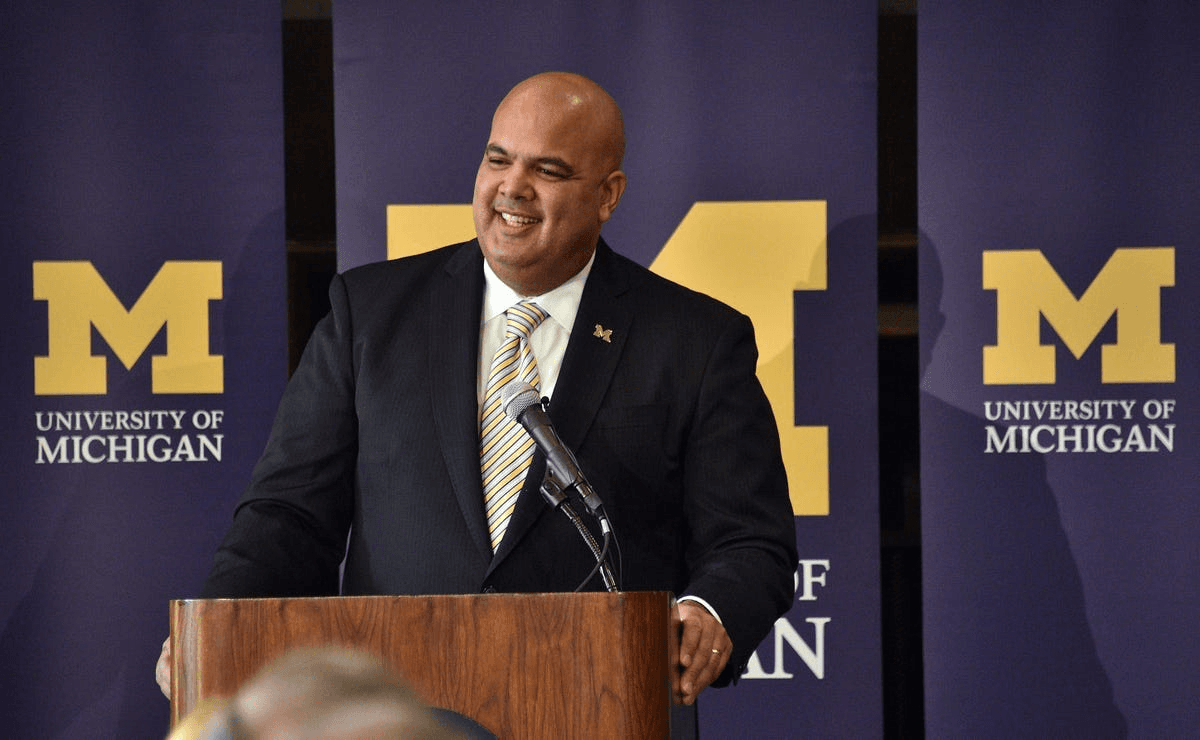
All roads eventually lead to athletic director Warde Manuel, who has run Michigan athletics since 2016.
On paper, his tenure has huge wins: a football national championship, Frozen Four runs in hockey, and high-profile hires and facility upgrades across the department. But the scandals and missteps have produced a chorus of critics wondering if Manuel is still the right person to steward one of the biggest brands in college sports.
Local columns and fan communities were already questioning his judgment well before Moore’s firing — particularly around the handling of Juwan Howard’s struggling men’s basketball program and the Shemy Schembechler fiasco. Now, with Moore fired for cause and sitting in jail while the football program recovers from an NCAA scandal, the volume of “fire Manuel” sentiment has spiked on message boards and social media.
There are two big questions swirling around Manuel today:
1) What did he know, and when?
Veteran Michigan reporter John U. Bacon noted he had heard rumors about Moore for years — most of them vague or unsubstantiated — and is now publicly asking what Manuel and the department knew and how they responded.
2) Can donors and recruits still trust the leadership?
Reports indicate some of Michigan’s biggest boosters had already cooled on Moore as the scandals piled up; losing their confidence in the athletic director would be even more dangerous for the department’s long-term health.
To be clear, there is no public evidence at this point that Manuel knew the full extent of Moore’s alleged misconduct and failed to act. But perception is reality in college sports, and the perception right now is that Michigan keeps getting blindsided on his watch.
So where does Michigan go from here?
In the short term, the school has to navigate the basics:
- Let the legal process play out for Sherrone Moore.
- Stabilize the football program under an interim coach.
- Launch a national coaching search under intense scrutiny.
The bigger question is structural: Is this the moment for a full reset of the athletic department’s culture and leadership?
A real overhaul would look like:
- Independent reviews that actually have teeth – not just after the fact, but as ongoing oversight of high-profile programs.
- Clearer accountability lines – who signs off on hires, what vetting looks like (see: Schembechler), and how concerns about behavior get escalated.
- Athlete- and staff-first culture – where hockey-style complaints about retaliation or toxic environments are addressed quickly and transparently, not allowed to fester until an outside law firm has to clean it up.
- A hard look at leadership – including whether the university still believes Warde Manuel is the right front man for Michigan athletics in an NIL-, transfer-portal-, and constant-crisis era.
Michigan can’t change what’s already happened — not the Anderson victims’ trauma, not the hockey culture failures, not the sign-stealing scandal, not the shocking downfall of its latest football coach. But it can decide whether this moment is just another scandal to survive… or the catalyst for genuine change.
Right now, in Ann Arbor, “what’s going on” is bigger than one coach in a mugshot. It’s a battle for the soul and future of one of college sports’ most powerful athletic departments — and the rest of the country is watching to see if Michigan finally practices the accountability it so often preaches.

