
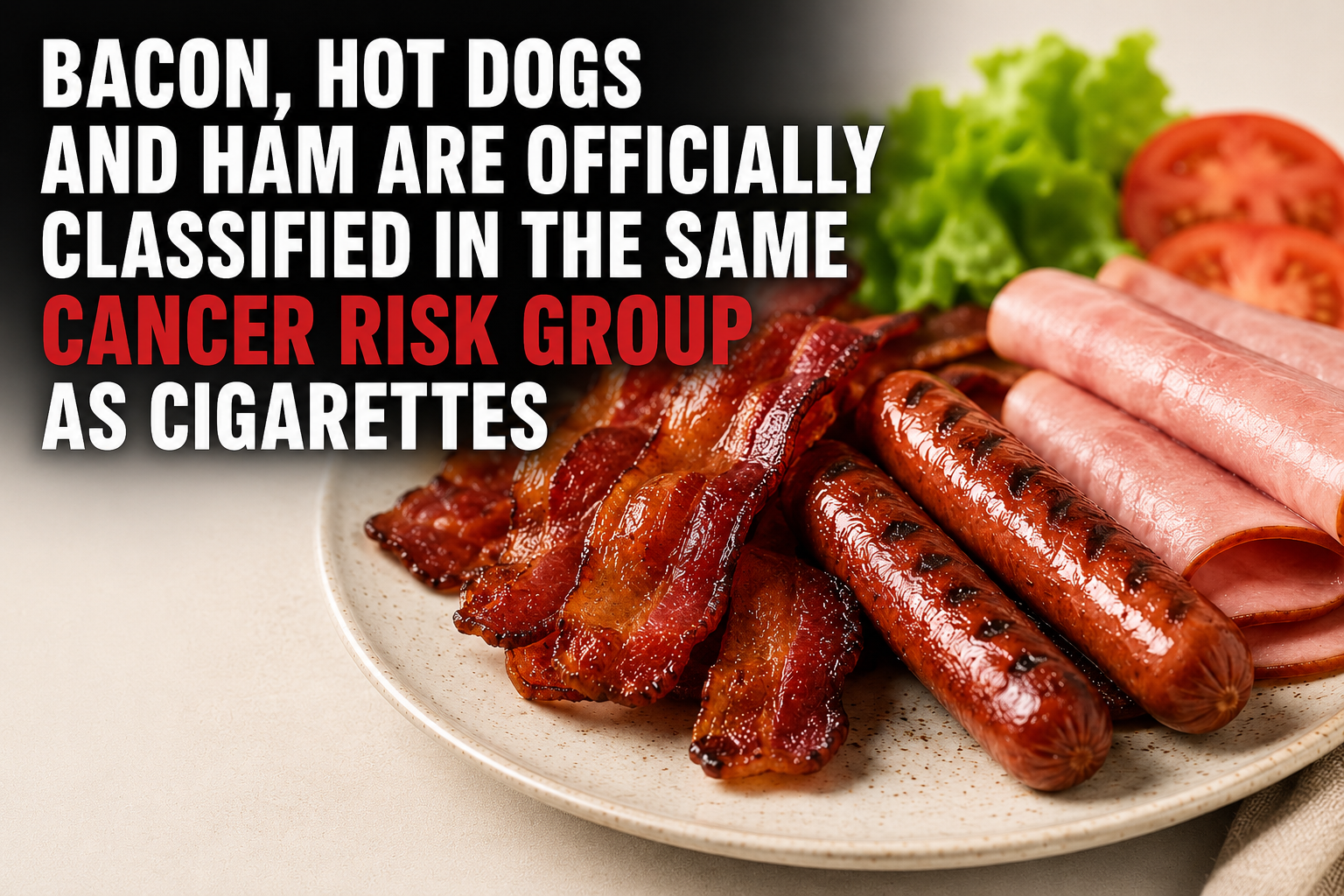
Most Americans do not think twice about eating bacon with breakfast, grabbing a hot dog at a baseball game, or ordering a sandwich piled high with deli meat. These foods have become part of our culture and our daily routines. That is why many people were stunned when the World Health Organization announced that processed meats had been classified as Group 1 carcinogens.
The reaction was immediate. Headlines spread across the internet and many people assumed the organization was saying bacon was just as dangerous as cigarettes. That is not what the research found.
The World Health Organization’s classification means there is strong scientific evidence that processed meats can cause cancer in humans. The classification measures the strength of the evidence, not the amount of risk. Cigarettes, alcohol, asbestos, and processed meats all fall into the same category because researchers are confident they can cause cancer. That does not mean they pose the same level of danger.
According to the World Health Organization, eating about 50 grams of processed meat each day, roughly the equivalent of two strips of bacon or one hot dog, is associated with an increased risk of colorectal cancer. While that increase is meaningful, it is far lower than the cancer risks associated with smoking tobacco.
Even so, health experts say the findings should not be ignored.
Processed meats are everywhere. They are convenient, affordable, and often delicious. For many families, they have been a regular part of meals for generations. The concern is not about enjoying a hot dog at a summer cookout or having bacon with breakfast on occasion. The concern is what happens when these foods become a daily habit over the course of many years.
This conversation is especially important within the Black community. African Americans experience higher rates of colorectal cancer and are more likely to die from the disease than many other groups. While access to healthcare, genetics, and other factors play a role, nutrition remains an important part of the discussion.
The good news is that small changes can make a big difference. Adding more fruits, vegetables, whole grains, and fresh proteins to your diet can improve overall health. Regular screenings and preventive healthcare can also help detect problems before they become serious.
No one is suggesting that people should panic every time they eat a slice of bacon. The real lesson is awareness. Understanding the long term effects of our everyday choices allows us to make better decisions for ourselves and our families.
The World Health Organization’s findings serve as an important reminder that what we eat today can affect our health tomorrow. Sometimes the most powerful changes begin with something as simple as taking a closer look at what is on our plate.

