

The economy is still growing, but a cooling job market, persistent inflation and slower growth are raising questions about what may be coming next.
By Gil Borman
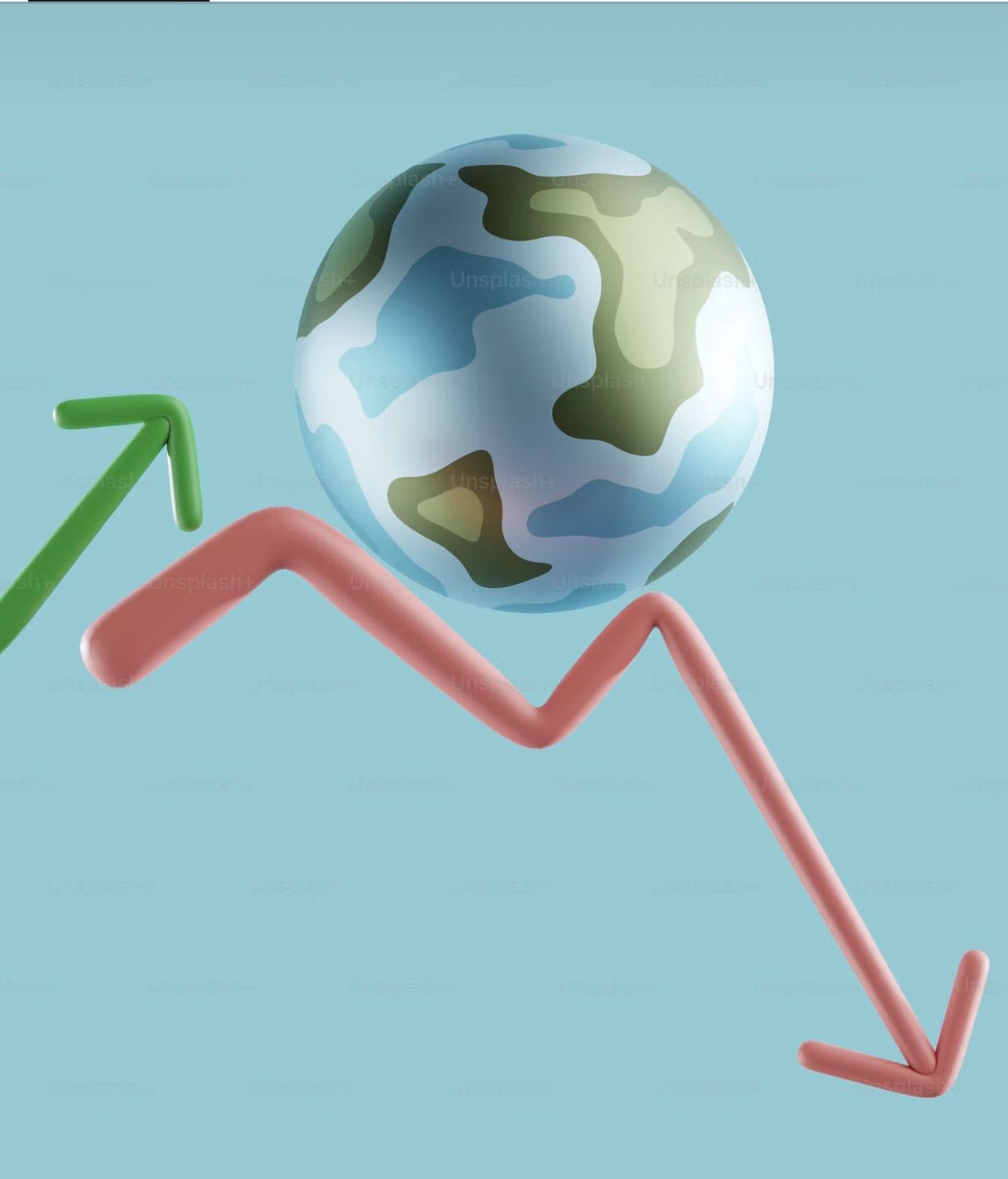
For months, Americans have been hearing two very different stories about the economy. Corporate profits remain strong, consumers continue to spend and the country is still experiencing economic growth, yet many families feel increasingly squeezed by the cost of everyday life while businesses have become more cautious about hiring. The once red hot labor market has cooled considerably, economic growth has slowed and interest rates remain high enough to make borrowing expensive for consumers and businesses. None of these factors alone means that a recession is coming, but taken together they raise a legitimate question that deserves serious examination. Are we headed for a recession?
The job market may provide the strongest reason for concern. The latest employment report from the U.S. Bureau of Labor Statistics showed that nonfarm payroll employment declined by 23,000 jobs in July while the unemployment rate remained at 4.1 percent. The decline itself attracted attention, but revisions to previous employment reports made the picture more concerning. May’s employment gain was revised from 129,000 jobs to 63,000 while June was revised from 57,000 to just 20,000. Together, the revisions removed 103,000 jobs from what had previously been reported, suggesting that the labor market had been weaker than initially believed. The Bureau of Labor Statistics also reported that payroll employment had averaged an increase of only 34,000 jobs per month during the previous 12 months.
Another important look at the labor market arrived on September 1 when the government released its latest Job Openings and Labor Turnover Survey. There were approximately 7.3 million job openings across the country in July, while businesses hired about 5.1 million people and total separations were also approximately 5.1 million. About 3.1 million workers voluntarily left their jobs while layoffs and discharges totaled approximately 1.7 million. Hiring in professional and business services fell by 188,000 during the month. The numbers do not suggest that American businesses are engaged in widespread layoffs, but they do show employers becoming more reluctant to hire.
That distinction is important because a cooling labor market is not the same thing as a collapsing labor market. Businesses can become cautious for months without triggering a recession, particularly when existing workers are generally keeping their jobs. The danger would increase significantly if weak hiring were eventually accompanied by widespread layoffs, rising unemployment and declining consumer spending. People who are worried about losing their jobs tend to spend less money, and because consumer spending represents such a large part of the American economy, a significant pullback can spread quickly from households to retailers, restaurants, automobile dealerships, real estate and other industries.
The next major piece of evidence arrives Friday, September 4, when the Bureau of Labor Statistics releases the August employment report. That report will be particularly important following July’s decline and the downward revisions to May and June. A meaningful rebound in hiring could suggest that July represented temporary weakness, while another disappointing report, particularly one accompanied by additional downward revisions or an increase in unemployment, would provide stronger evidence that the labor market is losing momentum. Until those numbers are released, predictions about August employment remain estimates rather than facts.
Employment is only one side of the economic story because the broader economy continues to grow. The Bureau of Economic Analysis reported that real gross domestic product increased at an annual rate of 1.5 percent during the second quarter of 2026 after increasing 2.1 percent during the first quarter. That represents a slowdown, but it does not represent an economic contraction. Consumer spending, exports and investment contributed to second quarter growth, while private domestic demand remained surprisingly strong. Real final sales to private domestic purchasers, which measures consumer spending and private fixed investment, increased at an annual rate of 4.2 percent during the quarter.
Corporate profits provide another reason to resist predictions that a recession is inevitable. According to the Bureau of Economic Analysis, profits from current production increased by approximately $400.9 billion during the second quarter after increasing by $74.4 billion during the first quarter. Strong profits give companies greater flexibility to invest, maintain payrolls and absorb temporary economic weakness. That does not guarantee businesses will continue hiring, but healthy corporate finances can provide an important cushion when economic conditions become uncertain.
Inflation presents a different challenge because Americans do not experience the economy through government statistics alone. They experience it at grocery stores, restaurants, gas stations, insurance offices and when they make mortgage, rent, credit card and automobile payments. Even when inflation slows, prices do not necessarily return to where they were several years earlier. Slower inflation simply means prices are generally increasing at a slower pace, which helps explain why economic reports can show improvement while many consumers still feel financially uncomfortable.
Interest rates add another complication. Higher borrowing costs can discourage people from buying homes and automobiles while making credit card debt more expensive. Businesses also face higher financing costs when borrowing money to expand, purchase equipment or fund new projects. Higher rates are intended to restrain demand and control inflation, but keeping borrowing costs elevated for too long can eventually weaken economic activity. This leaves policymakers with a difficult balancing act if employment continues deteriorating while inflation remains a concern.
The economy is therefore producing contradictions that make simple predictions difficult. GDP is growing, but growth has slowed from 2.1 percent in the first quarter to 1.5 percent in the second. Corporate profits have increased significantly, yet hiring has weakened. Consumers continue spending, but many households remain sensitive to elevated prices and borrowing costs. Businesses continue investing while simultaneously showing greater hesitation about adding employees. Depending on which statistic someone chooses to emphasize, it is possible to construct either an optimistic or pessimistic description of the American economy, which is precisely why the complete picture matters.
History also provides some perspective about what a recession actually means. The last officially recognized recession in the United States occurred during the COVID pandemic. The National Bureau of Economic Research determined that economic activity peaked in February 2020 and reached its trough in April 2020. The downturn was unusually brief, but the collapse in economic activity was so severe and widespread that it qualified as a recession despite its short duration. The economic expansion that followed officially began after that April 2020 trough.
There is also a widespread misconception that the United States automatically enters a recession whenever GDP declines for two consecutive quarters. That may be a useful shorthand, but it is not how recessions are officially determined in the United States. The National Bureau of Economic Research looks for a significant decline in economic activity spread broadly across the economy and examines several measures before identifying the beginning and end of a recession. Employment, income, spending, production and other indicators can all play a role in determining whether the economy has entered a genuine contraction.
Based on that standard and the information available today, the United States is not currently in recession. GDP continues to grow, consumers continue spending, businesses are investing, corporate profits are strong and unemployment remains relatively low. Those are meaningful economic strengths and should not be dismissed simply because some indicators have weakened.
The warning signs deserve equal attention. Payroll employment declined in July, previous employment estimates were revised substantially lower and employers are hiring more cautiously. GDP growth has slowed, borrowing remains expensive and inflation continues to influence both household budgets and monetary policy. None of these conditions guarantees a recession, but together they suggest an economy with less room for error if another major problem develops.
That may ultimately be the most important point. Recessions are rarely caused by one statistic suddenly crossing an invisible line. Economic weakness can build gradually as businesses become more cautious, hiring slows, consumers pull back and confidence begins to deteriorate. An outside shock involving energy prices, financial markets, international conflict or another unexpected development can then place additional pressure on an economy that was already losing momentum.
At the same time, history is filled with recession predictions that never came true. The American economy has repeatedly demonstrated an ability to absorb shocks that economists believed might trigger a downturn. Consumers can remain resilient longer than expected, businesses can continue investing despite uncertainty and new areas of economic activity can compensate for weakness elsewhere. Predicting the exact beginning of a recession is notoriously difficult, which is why declaring one inevitable based on today’s evidence would be premature.
The August employment report will provide an important indication of what happens next. If hiring rebounds while unemployment remains stable, consumer spending continues and business investment stays strong, recession concerns may begin to ease. If employment weakens again, unemployment rises and previous months are revised lower, the argument that the economy is moving toward a more serious slowdown will become considerably harder to dismiss.
For now, America appears to be experiencing a slowing economy rather than a recession. There are genuine strengths underneath the surface and equally genuine warning signs developing around the edges. The responsible position is neither panic nor complacency, but close attention to what the numbers are telling us. The economy is still growing, American businesses remain profitable and most workers remain employed, but hiring has weakened enough to demand attention. Whether this period becomes another slowdown that America successfully navigates or the beginning of the next recession will depend largely on what happens to jobs, consumers, inflation and business investment during the months ahead.

